Timber decking is designed to withstand outdoor conditions, but it does not remain completely unchanged. A timber deck naturally absorbs and releases moisture, causing it to expand and contract. Over time, this movement, combined with sun exposure, foot traffic and weathering, can lead to cracking, splitting or splintering. In Perth, the problem can be more noticeable because hot, dry summers are followed by cooler, wetter months, with around 80% of annual rainfall occurring between May and October.
Understanding the difference between these problems can help you decide whether your deck needs basic maintenance, repairs or board replacement.
Why Is Timber Decking Cracking?
Timber decking cracks when changes in moisture cause the wood to expand and contract repeatedly. Small surface cracks are common as timber ages, but deeper cracks can result from moisture imbalance, fixing stress or timber deterioration.
Perth’s long dry periods can cause decking to lose moisture and contract, while wetter conditions introduce another cycle of expansion. Strong sun exposure can also accelerate surface weathering, particularly on wood decks that receive direct afternoon sunlight.
Why Deck Cracks?
The location and appearance of the crack can provide useful clues.
| Likely cause |
Signs to look for |
| Moisture movement |
Fine cracks following the grain |
| Sun exposure |
Dry, weathered surface with surface checking |
| Poor spacing |
Tight gaps or restricted drainage |
| Poor ventilation |
Persistent dampness underneath |
| Exposed cut ends |
Cracking around board ends |
| Fixing stress |
Cracks around screws or nails |
What to Do About Cracked Timber Decking
- Check crack depth: Fine surface cracks are less concerning than deep cracks.
- Inspect for deterioration: Look for soft timber, decay or loose sections.
- Check drainage and airflow: Make sure water can escape and the underside can dry.
- Inspect fixings: Cracking around screws or nails may require correction.
- Check board gaps: Adequate spacing helps drainage and allows for timber movement.
- Prepare minor surface cracks: Sound timber can be cleaned and prepared before applying a suitable exterior finish.
- Replace severely damaged boards: Deep or widening cracks may require replacement by experienced Perth carpentry contractors.
- Protect cut ends: Exposed end grain should be appropriately sealed.
Where cracking is widespread or the cause is unclear, a decking repair contractor can assess the boards and supporting structure before repair work begins.
Why Is Timber Decking Splitting?
Timber decking is splitting when a crack penetrates deeper into the board or separates timber along its grain. This is generally more serious than shallow surface checking because it can weaken the board and create unstable or sharp sections.
Decking in Perth faces repeated drying and wetting that can cause an existing weakness at a fixing point, knot or board end to become more pronounced. Splits may also worsen where timber has been poorly supported or exposed to prolonged moisture.
Common Reasons Behind Splitting Timber Decks
The starting point of timber deck splits is particularly important.
| Location or pattern |
Possible cause |
| Board end |
Moisture entering exposed end grain |
| Around fixing |
Fixing too close to edge or end |
| Through a knot |
Natural weakness in the timber |
| Long split along grain |
Movement, checking or deterioration |
| At board joins |
Movement and joint stress |
| Several boards affected |
Wider moisture or installation issue |
Fixing details matter because unsuitable fixing positions can increase the risk of splitting. Appropriate edge clearances and predrilling may be required depending on the timber and fixing method.
How to Fix Split Decking
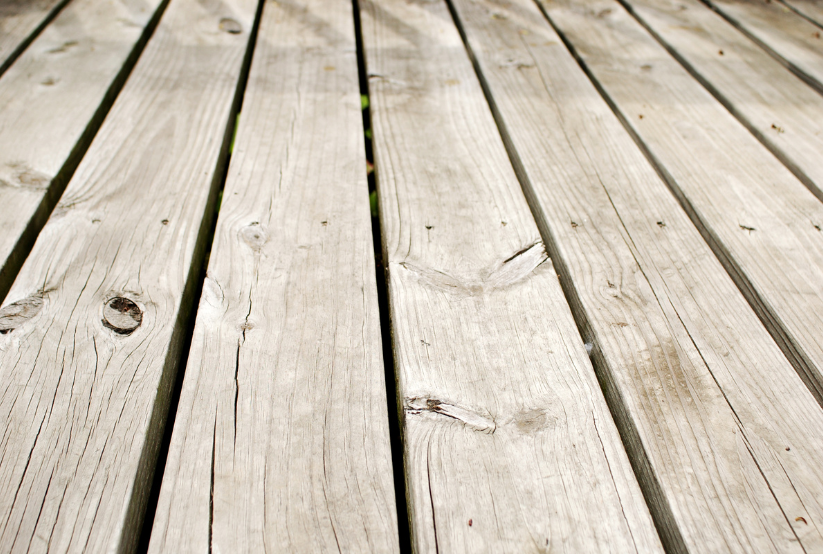
- Find where the split starts: Check board ends, fixings, knots and joins.
- Check whether it is spreading: A split that continues to open needs closer attention.
- Inspect the whole board: Damage may extend beyond what is immediately visible.
- Check the joists underneath: Look for poor support or deterioration.
- Inspect nearby boards: Similar splits can indicate a wider problem.
- Do not simply fill deep splits: Filler will not fix an underlying structural or moisture issue behind deck splitting.
- Repair minor damage only where the timber is sound: The board should be properly prepared first for timber deck repairs.
- Replace badly split boards: Deep separation or deterioration may make replacement the better option.
- Review fixing practices: Correct installation can reduce the chance of the problem recurring.
A decking repair contractor can assess whether a split is limited to the board or whether the surrounding fixings and supporting structure also need attention.
Why Is Timber Decking Splintering?
Timber decking splinters when surface fibres become loose, raised or fractured. This usually develops through weathering, surface wear and moisture movement, although severe splintering can also indicate deteriorating timber. Extensive splintering may also affect other exposed timber features, making outdoor carpentry an important part of the overall repair.
Perth’s strong sun and extended dry periods can gradually roughen exposed timber, while wetter months introduce further moisture movement. High-traffic areas can become particularly rough because the surface experiences repeated abrasion.
What Causes Timber Decking to Splinter?
The extent of the splintering can help identify the underlying issue.
| Condition |
What it may indicate |
| Small raised fibres |
Surface weathering |
| Rough older boards |
Prolonged exposure |
| Splinters along edges |
Weathered or damaged fibres |
| Splinters around cracks |
Existing timber damage |
| Widespread roughness |
Advanced weathering |
| Splintering with soft timber |
Possible deterioration |
Splintering can sometimes occur alongside deterioration in other exposed timber components, making exterior carpentry relevant when the surrounding structure also shows signs of weathering or damage.
What to Do About Splintering Timber Decking
- Assess the whole surface: Check whether only a few areas are affected or most of the deck.
- Look for deeper damage: Splintering with softness or decay may require board replacement.
- Remove loose fibres carefully: Avoid unnecessarily removing sound timber.
- Sand where appropriate: Sound boards can be smoothed to improve the walking surface.
- Clean the deck: Remove dirt, leaves and other debris before refinishing.
- Apply a suitable exterior finish: Use a product compatible with the timber and exposure.
- Keep drainage gaps clear: Prevent debris from trapping moisture.
- Avoid trapped moisture: Raise pot plants and similar items where necessary.
- Inspect regularly: Early deterioration is easier to address than widespread damage.
Where the boards are weathered but still structurally sound, deck restorations can involve cleaning, sanding and refinishing rather than complete replacement.
When Should Timber Decking Be Replaced?
Timber decking may need to be replaced by Perth outdoor carpentry experts when boards have deep cracks, significant splitting, widespread splintering, decay, soft spots or sections that have become unstable. However, replacing the visible boards may not be enough if poor drainage, inadequate support or fixing problems caused the original damage.
For homeowners considering replacement, hardwood decking is one option worth comparing for durability, appearance and long-term maintenance. But before choosing replacement materials, it is worth checking the condition of the existing structure and comparing the likely timber deck cost, maintenance needs and suitability of each decking option.
| Decking or service |
Estimated cost |
Maintenance |
Key consideration |
| Treated pine deck |
$250 – $420/sqm |
Regular maintenance and recoating may be required |
Cheap decking timber option |
| Merbau hardwood deck |
$420 – $680/sqm |
Regular cleaning and maintenance |
Durable hardwood suited to outdoor decking |
| Jarrah hardwood deck |
$520 – $820/sqm |
Ongoing timber maintenance |
Premium hardwood option |
| Composite deck |
$540 – $920/sqm |
Generally lower maintenance than natural timber |
Does not have the same natural timber movement |
| Pool surround deck |
$650 – $1,100/sqm |
Depends on the selected material and finish |
Poolside conditions can require specialised materials and installation |
Conclusion
Cracking, splitting and splintering are different problems, and the right solution depends on their cause and severity. Minor surface weathering may only require preparation and maintenance, while deep splits or deteriorated boards may need replacement. Perth’s seasonal weather makes regular inspection particularly valuable. Identifying problems early can help protect your deck and extend its usable life. Our experts at BODA Carpentry can assess damaged timber decking and help determine whether your Perth deck needs maintenance, repair or replacement.
Disclaimer: Any costs associated with timber decking repairs, sanding, refinishing or board replacement are estimates only. Actual costs vary according to deck size, timber species, condition, access, materials and labour. Current professional and manufacturer guidance should be checked before work begins.